




Multilingual SEO & Keyword Research for Search and AI Discovery
 Veruska Anconitano
Updated March 23, 2026
This week, genius International Expansion Consultant Veruska Anconitano explains the subtle nuances and complexities of multilingual SEO, plus how to tackle multilanguage keyword research.
Keyword research can make or break your SEO strategy, but it has never been just about finding the highest-volume terms. It’s about identifying the most relevant terms for your business, your audience, and the market you want to reach. When you expand into multiple languages and regions, that process becomes far more complex and far more strategic.
Multilingual SEO is not simply a matter of translating keywords from one language to another. It requires a deeper understanding of how people search in different markets, how language shapes meaning, and how local context influences intent. And now, as AI-powered search experiences increasingly shape discovery, that work also needs to support how your brand is understood and surfaced across languages, not just how your pages rank.
In this article, I’ll walk through how to approach multilingual keyword research and SEO in a way that goes beyond direct translation or tool-driven outputs. From the foundational considerations to the process of identifying valuable terms in each market, this guide is designed to help you build a strategy that is relevant, localized, and fit for how search works today.
Contents:
5 tips for starting a multilingual SEO project
1. Understand the market
Knowing the market is essential for effective multilingual SEO. It's important to differentiate market knowledge from language proficiency. While these two aspects can influence each other, they are independent. Market knowledge is crucial for understanding social dynamics, current events, issues (including logistical and political ones), and any factors that can indirectly impact your SEO strategy.
Market knowledge allows you to grasp the nuances of a region, including significant cultural events that drive search behaviour.
For example, February is a unique month for search trends in Italy due to the Festival di Sanremo. This annual music festival is a significant event in Italy, causing other TV channels to halt their regular programming and prompting brands to create specific marketing campaigns. During this time (and for at least one month after), search queries related to Sanremo and apparently unrelated queries surge, reflecting the interest and engagement of the Italian audience.
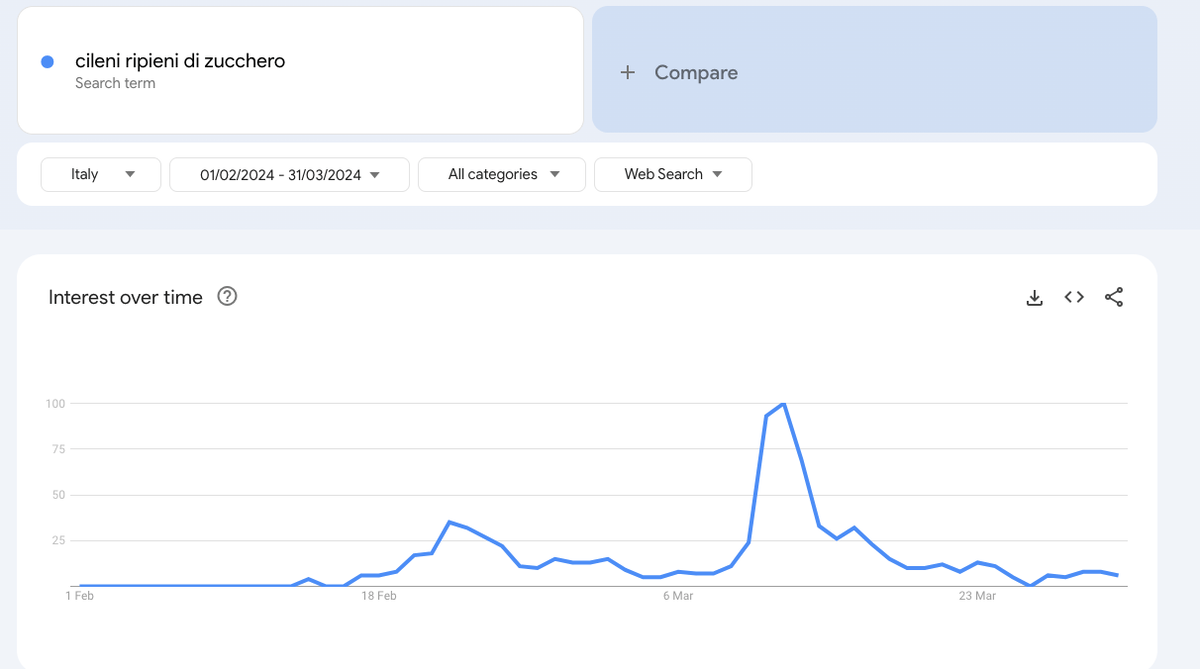
In 2024, a peculiar search trend emerged in the Italian market due to a song performed during the Festival. The search query "cileni ripieni di zucchero" (which translates to "Chilean filled with sugar") gained sudden popularity. Despite this phrase referring to something nonexistent (and being misled by listeners), people believed it was a type of cookie. This unexpected interest led one of Italy's major cookie brands to create a mock campaign featuring these fictional cookies, even collaborating with the singer who popularized the phrase.
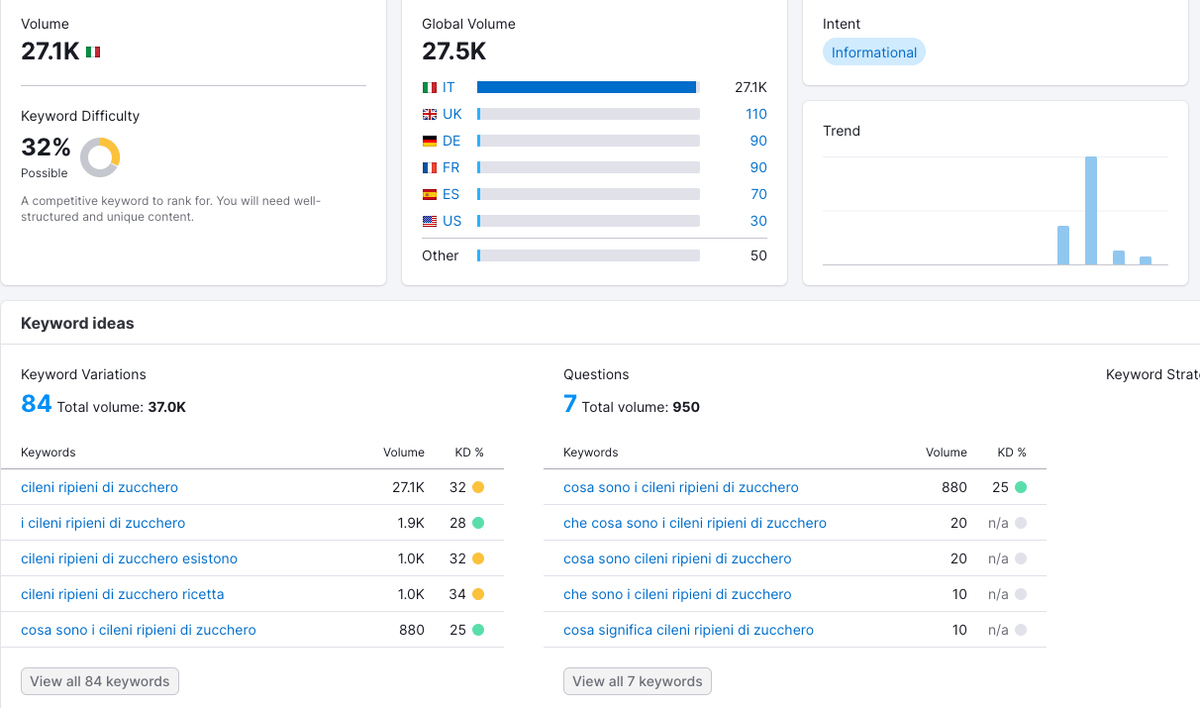
Without understanding the Italian market and the cultural significance of Sanremo, you might miss out on crucial search trends and fail to capitalize on them. For instance, if you were unaware of the festival's impact, you might not understand the sudden spike in searches for "cileni ripieni di zucchero" and would miss the opportunity to leverage this trend in your SEO strategy.
This matters even more now that discovery is increasingly influenced by AI-generated answers. Large language models do not just process words. They interpret context, relationships, and patterns. If your multilingual strategy lacks real market understanding, your content may be technically translated but still fail to reflect the local signals that make it relevant enough to be surfaced, cited, or trusted.
Why is this important?
Relevance and Precision: Understanding the market helps you create highly relevant content that is genuinely aligned with the audience, not just linguistically correct.. This increases the likelihood of engaging users and improving your search rankings and your AI citations and visibility.
Cultural Awareness: Each market has its own cultural nuances, preferences, and sensitivities. Knowing these can help you avoid mistakes that could alienate your audience and instead create content that resonates deeply with them.
Timely Trends and Events: Awareness of local events, trends, and issues enables you to tap into timely opportunities. This can drive significant traffic to your site and increase engagement.
Effective Keyword Research: Market knowledge informs your keyword research, allowing you to select keywords that are not only linguistically accurate but also contextually relevant.
By understanding the market, you can:
Anticipate Changes: You can anticipate shifts in search behavioUr and adapt your strategies accordingly.
Create Innovative Campaigns: You can develop innovative marketing campaigns that capitalize on current trends and cultural phenomena.
Engage Your Audience: You engage your audience more effectively by addressing their current interests and needs.
2. Know your target users' search habits
Users in different markets search differently based on their habits, backgrounds, and familiarity with a product, concept, or service.
For example, in Japan, people often search using highly specific, long-tail keywords due to the complexity of the Japanese language and the cultural emphasis on precision; reviews also play a significant role in shaping users’ consumption. In contrast, users in the United States might use broader, more generalized search terms, given the strong preference for English from search engines.
But search habits go beyond that, and they also encompass habits of searching for certain things at specific moments. For instance, in the United Kingdom, people often search for "bargain holidays" around late January and early February, aligning with post-Christmas financial planning and the desire for summer vacation deals.
Similarly, during the Chinese New Year, searches for specific terms like "red envelopes" or "lunar new year decorations" surge in China and among Chinese communities globally.
Additionally, it involves considering design preferences, which can vary significantly from one country or market to another and between different languages.
Without understanding why people in specific countries search for certain things in a certain way and how to design for their expectations, implementing a comprehensive multilingual SEO strategy and conducting KW research is almost impossible. Making sense of search habits is fundamental to understanding how to approach different markets and languages.
This matters for AI search as well. Users are no longer limited to typing short queries into a search bar. They increasingly ask full questions, describe tasks, compare options, and use conversational prompts. Those behaviours vary by market too. A multilingual strategy that only maps keywords, but ignores how people actually express needs in different languages, will miss an increasingly important layer of discoverability.
Why is this important?
Improved Relevance: Tailoring your SEO strategy to align with the specific search habits of your target audience ensures that your content is relevant to their needs and interests. This increases the likelihood of attracting and retaining users.
Increased Engagement: Users are more likely to engage when they find content that directly addresses their queries and concerns. This can lead to higher click-through rates, longer time spent on your site, and increased conversions.
Competitive Advantage: Companies that understand the nuances of their target markets can outperform competitors who use a one-size-fits-all approach. This knowledge lets you capture niche markets and respond to specific trends others might overlook.
Effective Keyword Research: Knowing how different users search enables more precise and effective keyword research. This helps select keywords that are linguistically appropriate and contextually meaningful, enhancing the overall effectiveness of your SEO efforts.
3. Recognize the intent behind every search
Understanding the intent behind every search is essential because search intents vary significantly based on market and language. While the traditional four categories of search intent—informational, navigational, transactional, and commercial investigation—provide a basic framework, they often fall short of capturing the true motivations behind specific searches.
This is where implicit search intent comes into play. It reveals the deeper reasons why people are searching for something that may not be immediately apparent. Understanding search intent is intrinsically linked to knowing the market and users' habits.
A clear example is the term "Web Summit," which receives about 7,000 searches every month in Portugal, with a noticeable spike from July to November each year. At first glance, this surge in search volume is due to a growing interest in the event itself. However, a deeper analysis reveals a more nuanced understanding.
In Portugal, particularly in Lisbon, people are continuously exposed to promotional materials for the Web Summit, both online and offline, for several months leading up to the event. This constant exposure generates curiosity among the locals, prompting them to search for "Web Summit" to understand what it is and why it’s so prominently advertised.
Therefore, the search volume is driven not just by potential attendees or those interested in the event but by locals who want to be informed about what is happening in their city to avoid feeling left out.
This becomes even more relevant in AI search environments, where users increasingly describe a need rather than type a keyword. Language models try to infer the task, concern, or decision behind a prompt. If your content only aligns with surface-level keywords, but not with the underlying need, you are less likely to be surfaced in those responses.
Why is this important?
Better Targeting: By understanding the deeper motivations behind searches, you can create content and campaigns that better address your audience's real needs and interests.
Improved User Experience: Providing information that aligns with users' implicit intent helps deliver a more satisfying user experience, increasing engagement and loyalty.
Optimized Content Strategy: Knowing why users search for specific terms allows you to develop a more effective content strategy that meets their underlying needs beyond surface-level queries.
Competitive Advantage: Companies that grasp the implicit search intents of their audience can differentiate themselves by offering more relevant and insightful content, thereby gaining a competitive advantage.
4. Understand that language shapes perception and society
Language profoundly influences how we perceive the world and interact within it. This is particularly evident in multilingual SEO, where the use of a precise language is of extreme importance.
It's not about knowing a language, but using the most effective terms to convey meaning accurately from one context to another.
The words we use shape society and each country has unique ways of using and interpreting terms, often making them idiomatic or specific to a particular culture.
To put things into perspective, think about a time when you travelled to a foreign country. You might have found that simple things like asking for directions or ordering food required more than direct translations of English phrases.
For example, if you were in Germany and wanted to order sparkling water, directly translating "mineral water" to "Mineralwasser mit Kohlensäure" might seem correct (though super hard to pronounce). Still, Germans commonly refer to it as "Sprudelwasser" or just "Sprudel”.
The same concept applies to keyword research—translating keywords from one language to another works until it doesn't, especially when done using tools. Basic translation might not capture local nuances and search behaviours, significantly impacting your keyword strategy and overall success. Even small differences can drastically alter the effectiveness of your SEO efforts. This is where multilingual SEO translation services become essential, as they bridge the gap between literal translations and the culturally informed language that drives real engagement.
An interesting example of linguistic differences is the term "ropa." In Spanish, "ropa" means "clothes." However, in Tagalog, spoken in the Philippines, "ropa" (derived from Spanish) idiomatically means "rag" or "old clothes." People who are not local may not recognize this subtlety, and translation machines won't either.

Imagine a clothing brand using "ropa" in its SEO campaign. In Spanish-speaking countries, it would be understood as stylish or fashionable clothes. But in the Philippines, it could be interpreted as old or second-hand clothes, completely changing the brand’s intended image. A better translation for "clothes" in Tagalog would be "damit."
This is a reminder that working with local SEOs is the only way to ensure your multilingual SEO is effective and reliable.
That gap matters even more in AI search. Large language models interpret relationships between terms, entities, and context across languages. If your localized content uses inconsistent, awkward, or culturally misaligned language, the model may struggle to confidently connect your brand with the right concepts. In practice, that means weaker visibility, weaker associations, and less likelihood of being cited or recommended.
Why is this important?
Improved User Engagement: Accurate language ensures content resonates with local audiences, improving user engagement and interaction.
Better SEO Performance: Correctly idiomatic keywords align better with local search behaviours, leading to higher search engine rankings and more relevant traffic.
Brand Reputation: Using the proper language prevents misunderstandings and potential offence, protecting your brand’s reputation in diverse markets.
Cultural Relevance: Understanding and using culturally appropriate language fosters a deeper connection with audiences, making your content more relatable and impactful.
Increased Conversions: Engaging and relevant content tailored to the local context can lead to higher conversion rates and better business outcomes.
Competitive Advantage: Companies that go hyperlocal can outperform competitors by effectively reaching and engaging a broader audience.
Societal Impact: Thoughtful language use can reinforce positive cultural norms and values, contributing to a more inclusive and respectful society.
Cost Efficiency: Setting processes at the beginning can prevent costly mistakes and rework, leading to more efficient marketing and communication strategies.
5. Shift focus from volume to relevance in multilingual SEO
One of the biggest concerns about multilingual SEO (and marketing in general) is that search volumes can be significantly lower compared to those in the source market and language. This discrepancy often causes anxiety for SEOs, who may fear that lower volumes equate to less traffic and fewer opportunities. However, it's important to shift the focus from sheer volume to the relevance and appropriateness of the keywords used.
It's common to find keywords with very low or even zero search volumes in certain markets.
Nevertheless, they are valuable if these keywords are relevant to the business, attract the right audience, and offer a high ROI (determined by their relevance to the market).
This is especially true when multilingual SEO supports more than one channel. A relevant term can shape paid campaigns, help inform creative messaging, support internal linking, guide localization decisions, and feed broader brand visibility efforts across markets. In other words, low-volume terms can still punch above their weight when they are tightly connected to audience needs.
This point becomes even stronger in AI search. Language models do not rely on a single high-volume keyword to understand what a brand is relevant for. They learn from broader topical coverage, repeated associations, specific phrasing, and contextual consistency. That means niche terms, long-tail variations, and highly local language can all contribute to visibility, even when their classic search volume looks negligible.
Why is this important?
Targeted Audience: Focusing on highly relevant keywords to the local market attracts a more targeted audience. This increases the likelihood of engaging genuinely interested users in your products or services, leading to higher conversion rates.
Quality Over Quantity: Prioritizing relevance over volume ensures that the traffic you attract is of higher quality. These users are more likely to engage with your content and take desired actions, which improves overall SEO effectiveness.
Sustainable Growth: A strategy centered on relevance and appropriateness is more sustainable in the long term. It builds a solid foundation for continued engagement and growth instead of chasing high-volume keywords that may not deliver meaningful results.
Efficient Use of Resources: You can allocate your resources more effectively by identifying and targeting the most relevant keywords. This ensures your efforts are directed towards the most promising opportunities, optimizing ROI.
How to do multilingual keyword research for SEO and AI search
There's no universal approach to multilingual keyword research; it must be tailored to your niche, target markets, and overall objectives. Still, a strong multilingual strategy usually follows the same core principle: start with what matters in the source market, then rebuild it for each target market based on local language, local context, and local search behaviour.
What matters now is that this process no longer supports only traditional rankings. It also influences how clearly your brand, products, and topics are understood across languages in AI-powered search experiences. That makes local precision even more important.
Step 1: Analyze seed keywords in the source language
Start by compiling a list of seed keywords in your source language, typically English. These core terms should directly relate to your business, products, or services.
How to compile seed keywords:
Identify Primary Keywords: Focus on the main keywords that drive significant traffic to your website.
Expand the Keyword List: Include variations, synonyms, and related terms to create a comprehensive list.
Analyze Performance: Evaluate metrics such as search volume, competition, and current ranking positions.
Example: For a business selling running shoes, seed keywords might include "running shoes," "best running shoes," "athletic shoes," and "jogging shoes."
This step is also where it helps to think beyond keywords alone. In AI search, what matters is not only the phrase itself, but the concept behind it. A strong seed list should help you identify the main entities, product categories, and problems your brand needs to be associated with across languages.
Step 2: Generate keyword ideas in the target language
Identify which terms can be directly translated and which require localization to make sense culturally and contextually. Use your seed keywords and your knowledge of the product and the market to generate a list of equivalent terms in the target language(s).
Steps to Generate Localized Keyword Ideas:
Translate Core Keywords: Start with direct translations and assess their relevance.
Create Hyper-Local Variations: Consider local language nuances, slang, and idiomatic search phrases.
Analyze Local Competitors: Investigate which keywords local competitors are targeting.
Example: For a French website, "running shoes" might translate to "chaussures de course." However, locals tend to use "chaussures running". A European French expert can quickly identify these additional terms.
This second step is also extremely important from an AI visibility perspective. LLMs connect ideas across languages, but they still rely on the terms that appear consistently in local content. If your localized pages use terminology that feels unnatural or disconnected from how people actually speak, your visibility can weaken not only in traditional search, but also in AI-generated responses.
Step 3: Validate your keyword list
After generating local keyword ideas, validate them to ensure they have sufficient search volume and manageable competition. Validation should go beyond checking whether a term has search volume. You also need to confirm whether it is truly relevant, how competitive it is, what kind of pages rank for it, and whether the search results match the intent you want to serve.
How to Validate Keywords:
Check Search Volume: Determine the monthly search volume for each keyword in the target language and country.
Assess Competition: Analyze the competition level for each keyword.
Evaluate Relevance: Ensure the keywords are highly relevant to your business and the planned content. Keywords with high volume but low relevance will not drive meaningful traffic.
Example: Using a tool or, even better, searching directly on Google.fr will validate that "chaussures running" has a substantial search volume and a competition level.
Whenever possible, involve local experts at this stage. A term may look correct in a spreadsheet and still be wrong in practice. Native market knowledge is often what prevents expensive mistakes.
It is also worth validating keywords beyond the usual SEO metrics. In AI search, useful signals include whether your terminology appears consistently across your own site, whether related concepts are covered clearly, and whether your localized content reinforces the same brand and product associations in each market. You are not only validating keywords. You are validating whether your presence is understandable across languages.
A final note: local keyword sets will often differ significantly from the original seed list, and they may have much lower search volumes than the source market. That is normal. It does not mean the keyword set is weak. It usually means the market is different, the language is different, and the opportunity needs to be evaluated on local relevance rather than on comparison with English.
2 multilingual SEO examples worth studying
Example 1: Amazon
Amazon is a useful example because it shows what multilingual SEO looks like when localization is taken seriously at both the language and market level.
Let’s begin by comparing Amazon.fr and Amazon.ca. Both serve French-speaking audiences, but they are built for two different markets: France and Canada. Many brands still make the mistake of treating French as a single localization decision, assuming that one version can serve everyone. Amazon does the opposite. It differentiates by country as well as by language, acknowledging that Canadian French and European French do not behave the same in practice.
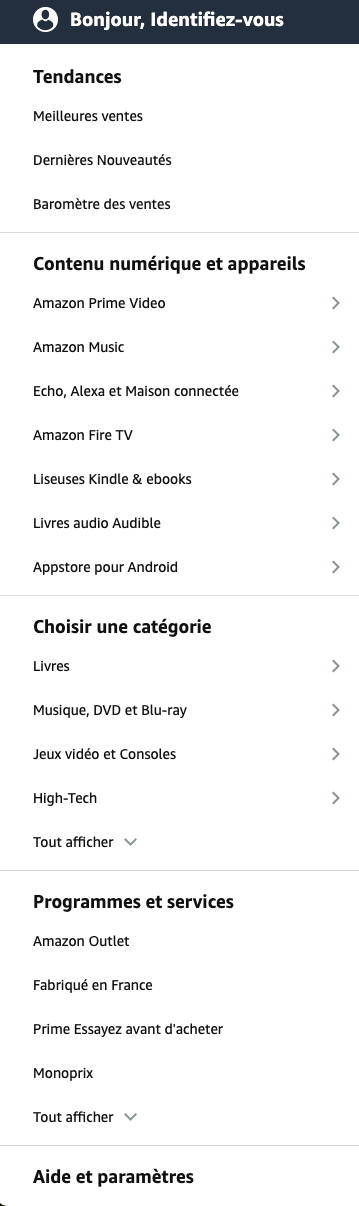
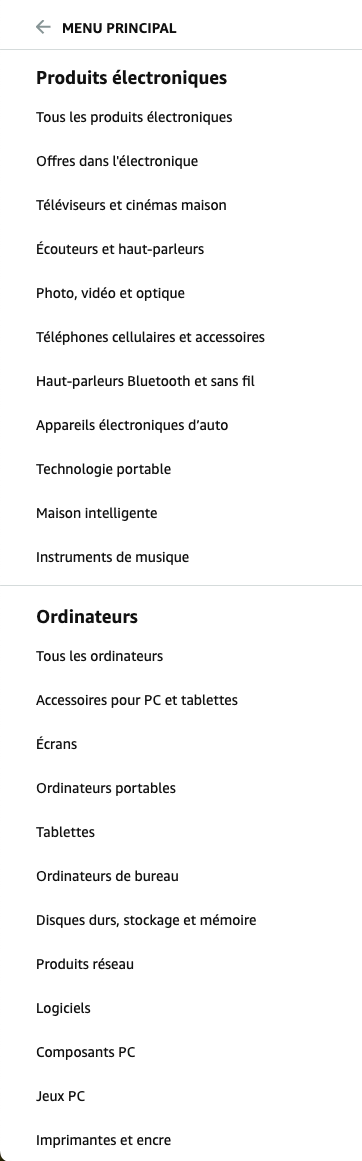
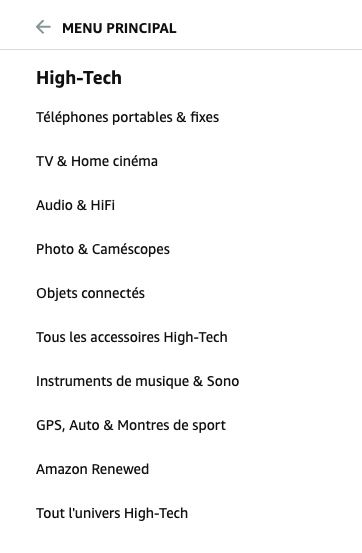
That decision affects much more than translation. It shapes menu labels, category naming, subcategory depth, merchandising, and the way products are presented. In Canada, for example, a category may be labeled “Électronique, ordinateurs et bureau,” while in France the equivalent section is framed as “High-Tech.” That difference may seem small, but it reflects local usage, local expectations, and local search behaviour.
This is Amazon.fr

This is Amazon.ca:
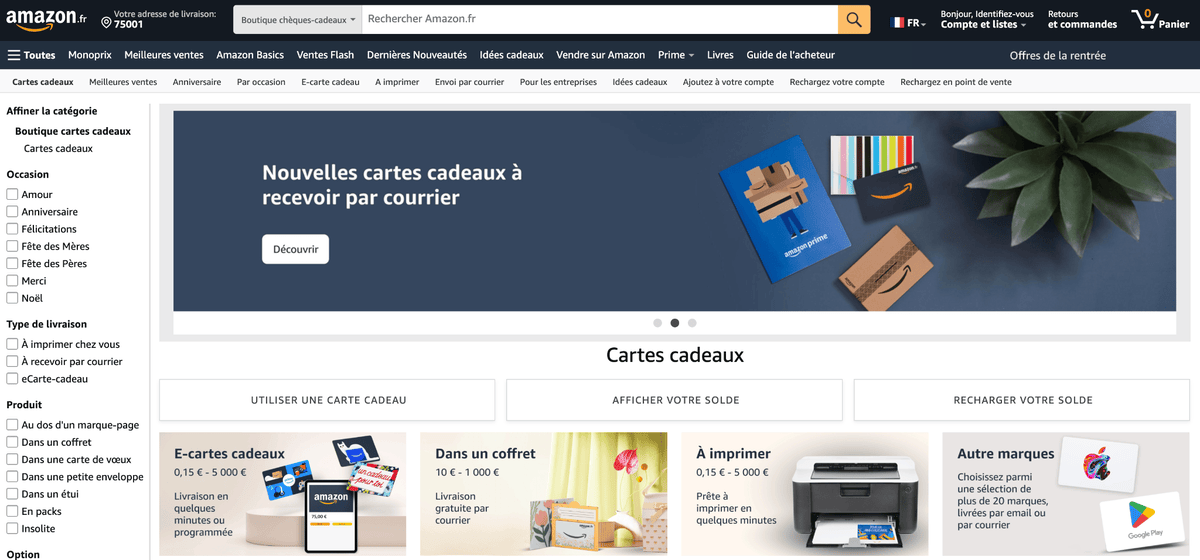
The menus differ significantly between the Canadian and European French versions. While both highlight top trends to cater to user interests, the product categories show notable variations. Content is tailored to market preferences and search volumes: for instance, in Canada, the category is labeled "Électronique, ordinateurs et bureau," whereas in France, it's called "High-Tech."
Amazon’s approach is a reminder that multilingual SEO works best when the experience feels built for a market, not exported into it. It also offers an important lesson for AI visibility: consistent localization helps systems understand what your pages represent in each market, while market-specific terminology helps ensure that relevance is not lost in translation.
Amazon France:
Amazon Canada:
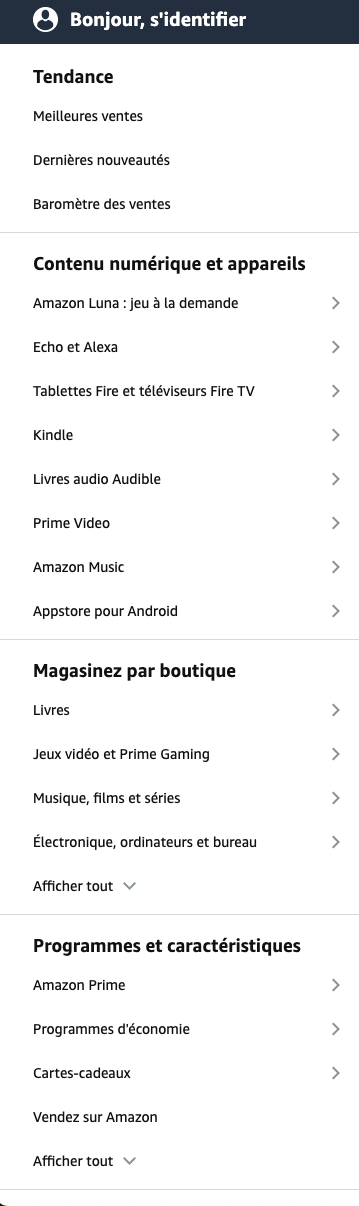
On Amazon.fr, sections like “Fabriqué en France” also show how localized taxonomy can connect search demand, merchandising, and cultural relevance. That strengthens both discoverability and conversion because the site reflects what matters locally rather than relying on a universal structure.
Subcategories on Amazon.ca:
Subcategories on Amazon.fr
Example 2: Rakuten
Rakuten is another example of multilingual SEO done well. The two versions of the popular marketplace, the Japanese and the American, are entirely different and don't mirror each other.
Rakuten Japan reflects local expectations around ecommerce design and information density. The page is visually busy, highly promotional, and packed with offers, highlights, and updates. Categories are present, but they do not dominate the experience in the same way they often do on Western sites. This structure aligns with what many Japanese users are comfortable with: a high-information environment that supports browsing, comparison, and discovery.
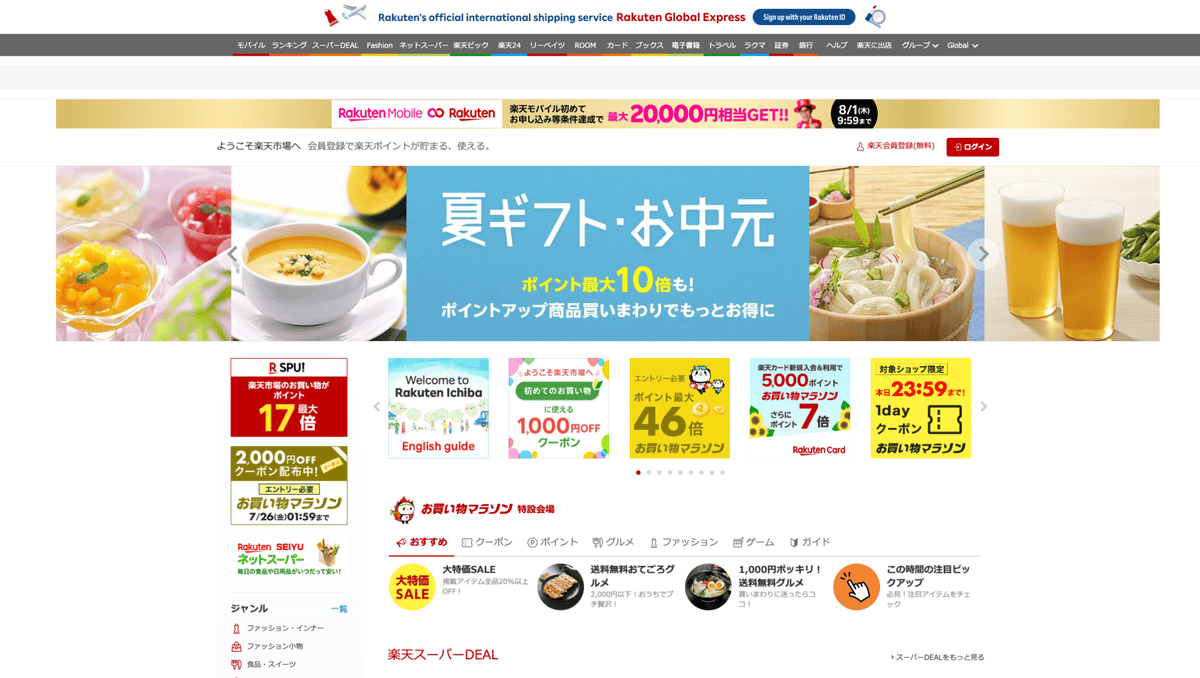
In stark contrast, the American website is extremely minimalistic to be readable and easy to use. It focuses on traditional e-commerce SEO categories and pushes to the extreme a concept Americans love: cash back and savings.

What makes Rakuten a strong multilingual SEO example is not just that the language changes. It is that the site architecture, design choices, and content emphasis change with the market. That is the real lesson: multilingual SEO is not about creating equivalent pages in different languages. It is about creating locally relevant experiences that reflect how users search, browse, and make decisions.
That matters even more today, because AI systems increasingly evaluate brands and websites through patterns of consistency, clarity, and contextual relevance. Rakuten’s market-specific approach makes each version easier to understand on its own terms rather than forcing one global model onto very different audiences.
Finding the key to multilingual SEO success
Multilingual SEO has never been just about translating keywords or publishing the same content in multiple languages. It requires a much deeper understanding of how people search, what matters in each market, and how language, culture, and context shape relevance.
For brands expanding internationally, the real challenge is not simply creating localized pages. It is building a search presence that feels genuinely local while staying strategically consistent across markets. That means understanding user behaviour, identifying the right terminology, aligning with local intent, and working with people who know the market well enough to spot what a tool or translation alone will miss.
That work matters not only for traditional organic search, but increasingly for AI-powered discovery too. As search engines and language models become better at interpreting context across languages, brands need content that is not just translated, but clearly localized, well-structured, and easy to understand in every market they serve.
The brands that succeed in multilingual SEO are usually not the ones producing the most content. They are the ones building the most relevant, credible, and context-aware presence in each language. That is what helps them rank better, connect more effectively with local audiences, and become easier to surface across both search engines and AI-driven experiences.
You might also like:

Sitebulb is a proud partner of Women in Tech SEO! This author is part of the WTS community. Discover all our Women in Tech SEO articles.

Veruska Anconitano is an International Expansion Consultant focused on multilingual SEO and globalization with over 20 years of experience helping brands entering non-English speaking countries. She is also the co-founder of InclusivitEasy and a dedicated academic researcher exploring the digital divide through the lens of sociolinguistics, focusing on languages and gender dynamics. With a Master's in Data Science and a background in sociology, sociolinguistics, semiotics, and LLMs/AI, she leverages her expertise in SEO, international strategies, cross-cultural communication, market research, and content strategy to craft data-driven solutions with a deep understanding of cultural nuances.


Related Articles
 Webinar: International SEO & Localization

 8 International SEO Mistakes & Fixes for Your Expansion Strategy

 Sitebulb Desktop
Find, fix and communicate technical issues with easy visuals, in-depth insights, & prioritized recommendations across 300+ SEO issues.
- Ideal for SEO professionals, consultants & marketing agencies.
 Sitebulb Cloud
Get all the capability of Sitebulb Desktop, accessible via your web browser. Crawl at scale without project, crawl credit, or machine limits.
- Perfect for collaboration, remote teams & extreme scale.