

 Sei Kato
This week, we’re grateful to Sei Kato who explains why and how structured data matters in today’s AI-driven search landscape, especially in the YMYL niche…
It’s no secret that AI SEO (aka. AEO, GEO and many other of its names) has hit the spotlight in recent years, to the point where many job titles only include AEO Manager now, placing an emphasis on being visible to LLMs including in Google AI Overviews.
However, there are a few of the same SEO factors that the masses seem to have missed in the past that are even more important in the age of AI SEO…
You’ve probably guessed by the title of this blog, but that is absolutely: Technical SEO.
Contents:
- Why sites need structured data such as schema (especially in health/YMYL niches)
- Telling Google you are an entity improves your “Google EAT”
- Structured data (most likely) increases your chances of being shown in AI Overviews
- Using Sitebulb’s structured data tool for schema to optimise for AI SEO
- Conclusion: It’s more important than ever to feed Google information it can actively use in AI Overviews and help it decide whether you’re worth trusting → Structured Data
Why sites need structured data such as schema (especially in health/YMYL niches)
Being a trusted, authoritative entity within Google’s algorithm, particularly within highly regulated niches such as Medical/Health/Supplements, has been super important for a long time now.
It’s easy for anyone to point at major publishers and trusted industry heavyweights like Healthline and Men’s Health, the “big guys” ranking with BOFU (bottom of funnel) “money pages”, and just say “that’s because they’re a big company”.
However, look closer at what they’re doing from a technical SEO perspective and you’ll find that while they do have the advantages of brand, they’re also most likely doing the right things to help Google keep rewarding them (note: I’ll take a closer look at some sites for real life examples later in this blog).
Seasoned SEO’s will know this already, but it really is important to remember that Google isn’t this almighty being that reads content like humans…albeit, its algorithm of course is pretty mighty and deserves all the praise for being as good as it is as a search engine, regardless of the criticisms that we SEOs like to give it.
My point is, Googlebot crawls your website as the very first step in its process of, ultimately, deciding whether to reward your page/site with a lucrative spot within the (typically) 10 URLs on its prime real estate for each KW.
Unless you check the crawlability box, it will never matter whether your spelling is correct and you’ve written an absolute masterpiece of an article; no-one will organically discover something that isn’t indexed.
On top of that, a key way Google can see whether you are worth trusting or not, while in the process of effectively “judging” your page or site, is to tell its algorithm whether you are a “real” entity; whether that’s a real business with a real office location, a real person with credentials behind a blog/review site and more.
In Google’s own words on their page about entity extraction:
“In the context of entity extraction, an "entity" refers to a specific piece of information or an object within a text that holds particular significance. These are often real-world concepts or specific mentions that systems can identify and categorize. Think of them as the key nouns or noun phrases that convey factual information.
Common types of entities include:
- People: Names of individuals (for example, "Sundar Pichai," "Dr. Jane Doe")
- Organizations: Names of companies, institutions, government agencies, or other structured groups (for example, "Google," "World Health Organization")
- Locations: Geographical places, addresses, or landmarks (for example, "New York," "Paris," "United States")
- Dates and times: Specific dates, date ranges, or time expressions (for example, "yesterday," "5th May 2025," "2006")
- Quantities and monetary values: Numerical expressions related to amounts, percentages, or money (for example, "300 shares," "50%," "$100")
- Products: Specific goods or services (for example, "iPhone," "Google Cloud")
- Events: Named occurrences such as conferences, wars, or festivals (for example, "Olympic Games," "World War II")
- Other specific categories: Depending on the application, entities can also include job titles (for example, "CEO"), phone numbers, email addresses, medical codes, or any custom-defined terms relevant to a particular domain
“The goal is to identify these significant mentions and assign them to a predefined category, transforming unstructured text into data that a computer can process and interpret.”
It's pretty clear cut that Google actively wants you to help them out by spoon-feeding them information in a way that Googlebot actively reads…structured data.
Structured data has been super important for over 10 years now but it has special value in 2026
I remember 10 years ago when I’d created my first affiliate review site, being blown away by discovering structured data and adding it to my review pages for star ratings - then seeing Google show the star ratings as “rich results” on the SERPs pages.
An example of the necessary code from a page on Google Search Central can be seen in the below screenshot:
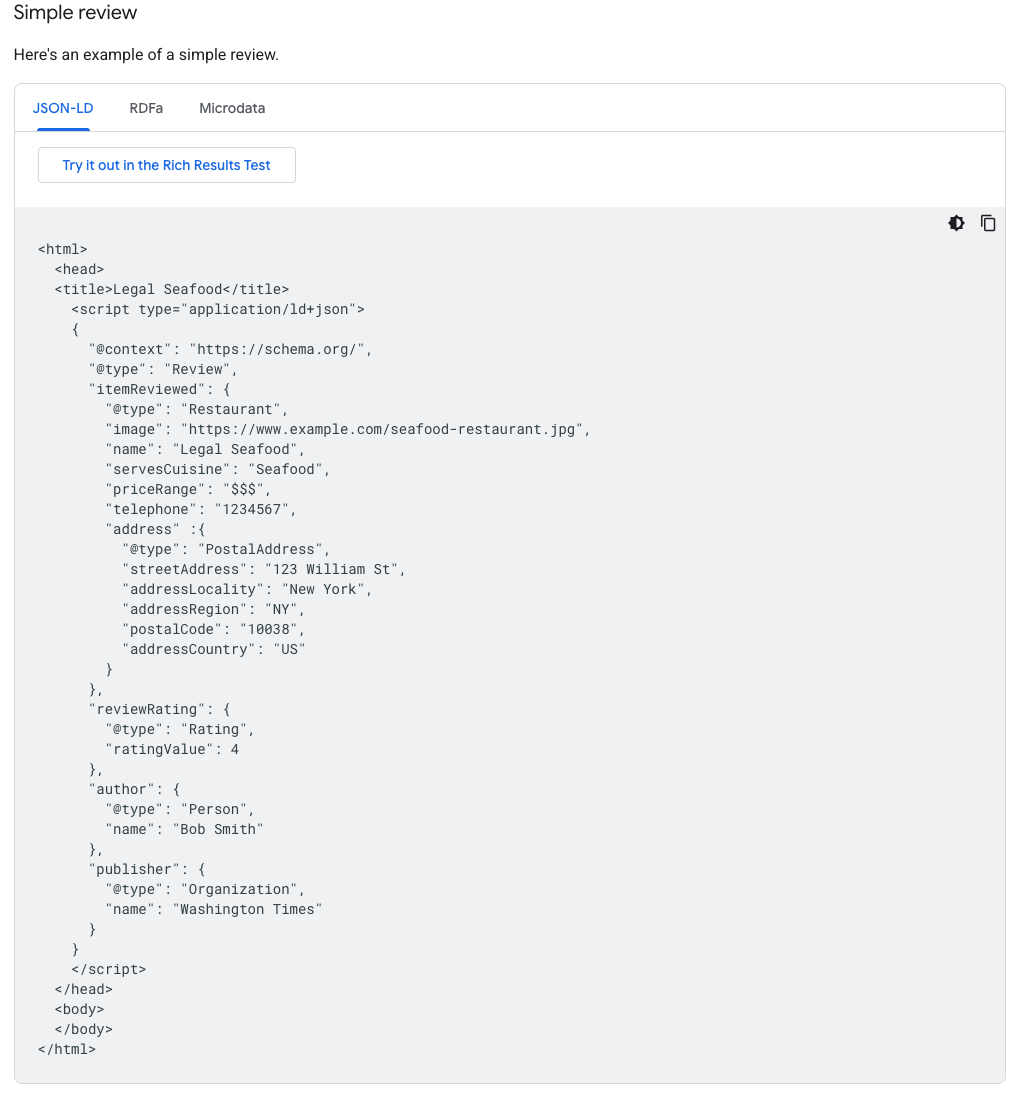
At the time, it had a very positive impact on my CTR by making my reviews stand out more in the top 10 ranking positions for product review KWs - and thus directly benefitting my ranking, organic traffic and affiliate sales.
So, as you can imagine, I became very focused on using structured data right at the start of my journey into SEO, wayyyy before the age of AI we now find ourselves in.
Telling Google you are an entity improves your “Google EAT”
This point is quite a funny one. The SEOs who know me from “inside circles” will know that I directly shit on Google EAT for the most part…I’m well aware there’s now an extra “E” added on.
…but it’s not actually Google EEAT itself that I’ve always laughed at…it’s many people's assumptions about what it is and how they act on it.
That’s because Google EEAT isn’t something you can quantify as a “ranking factor”, since it really isn’t a ranking factor within Google’s (non-AI driven) algorithm at all.
A great comparison can be seen with Core Web Vitals; some truly believe it’s an important ranking factor and that you need to have all the metrics in the “green” in order to rank well. However, a quick look at the SERPs show many sites failing Core Web Vital metrics and ranking just fine.
In the same vein, some believe this about Google EEAT: add an author name, write a short bio, mention a few credentials, and congratulations…you’re now “optimised for Google EEAT and ready to rank”.
The above is simply not true.
Think back to a few years ago when India-based news publications with “sponsored posts” published by affiliates started dominating all US and UK rankings for BOFU “money KWs” - there was no topic-specific “experience or expertise” baked into those domains for the KWs they were ranking for.
To further this point, expired domains repurposed for YMYL topics also broke into competitive spaces they were never originally part of (with many still ranking highly today, even in some of the most tightly regulated niches online).
Following Google EEAT guidelines without implementing structured data to feed Googlebots (and LLMs) isn’t enough
In reality, Google EEAT is a set of guidelines for human quality reviewers, not the algorithm itself - with Barry Schwarz confirming this with the statement, “the quality raters and their guidelines are NOT ranking signals” in his post on Search Engine Roundtable.
Instead of following misconceptions about Google EEAT to determine your SEO strategy, it’s important to understand what Google is actively trying to do: to identify and verify entities.
It’s not just deciding whether content is subjectively the best thing the writer has ever written and if there’s a name of a human being in an author box. Instead, it’s trying to understand:
a) whether that person is real,
b) whether their expertise can be verified through numerous different sources and worth showing to users, and
c) whether the site itself represents a legitimate, trustworthy entity.
This is where most Google EEAT conversations fall short. Simply including the name of your writer in an author box, in standard HTML, isn’t a box to tick and move on from. To an algorithm, that is just text on a page with no inherent validation.
Google EEAT should be taken into consideration, just not obsessed over as if it’s the #1 ranking factor
This is exactly why structured data plays such a big role, especially in the age of AI SEO.
The shift for practitioners is quite straightforward, but it requires a different way of thinking. Instead of focusing on how expertise is presented to users, the focus should be on how that expertise is communicated to Google in a structured and verifiable format.
That means turning authors into clearly defined entities, not just names attached to content. It means linking those entities to real, external profiles and providing consistent, detailed information about their experience and credentials. It also means connecting authors, reviewers, and the content itself in a way that forms a clear, traceable relationship that Google can follow.
The same applies at a site level. You are not just running a website, you are telling Google you’re an organisation that deserves to be trusted as an entity in its own right.
The bottom line is that Google EEAT should guide your SEO…but structured data is how you truly implement and tick the boxes Google actually wants to see. This approach not only encourages Google to trust your content, but also now directly benefits your AI SEO strategy too.
Structured data (most likely) increases your chances of being shown in AI Overviews
I’ve gone off on a bit of a rant about Google EEAT misconceptions above. However, to get back to how structured data is arguably more important in AI SEO than ever before - there’s evidence showing that AI Overviews draw from structured data and might give you a boost in being included in them.
A small SEO test on Search Engine Land compared 3 sites with 3 different levels of schema implementation to see if schema impacted AI visibility on Google. The result was that “only the page with well-implemented schema appeared in an AI Overview”, which will directly increase your chances of getting increased clicks to your site - either directly from an AI Overview - or by increasing your brand searches and clicking through to your site from there.
I’ll go back to my earlier point about directly “spoon feeding” Google information; you can achieve that by feeding it tons of structured data such as “person” schema to ensure Google knows that your author is, firstly, a “real” human being and, secondly, has the right credentials within highly regulated niches worth trusting.
The bottom line is that you can have content written by the leading expert in the world in their field, but if you’re not spoon feeding Google information via structured data, then it might miss that fact and not reward you accordingly.
It is also worth saying that this is where smaller brands can close the gap with larger competitors - it is about having the knowledge, discipline and insights to go the extra mile - and there are SEO tools that can help.
Using Sitebulb’s structured data tool for schema to optimise for AI SEO
I really do believe Sitebulb’s visual take on presenting technical SEO helps SEOs show issues clearly - and saves us having to create our own graphs most of the time when creating reports for CEOs and stakeholders…there’s nothing like screenshotting automatically created graphs for tech SEO, as I’m sure many of you reading this agree!
Anyway, with that said, here’s a nice screenshot of Healthline’s “person” schema implemented on one of their “best [supplement] pages - it’s important to point out that this page is both ranking highly and being included in Google’s AI Overview in the US, where the search volume is highest:
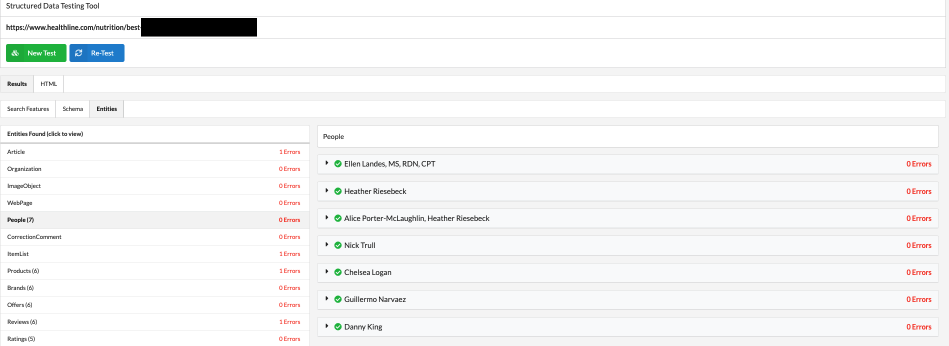
One look at their structured data shows you everything you need; they’ve told Google that 7 professionals with the right credentials, which work at their company, have written and edited this article.
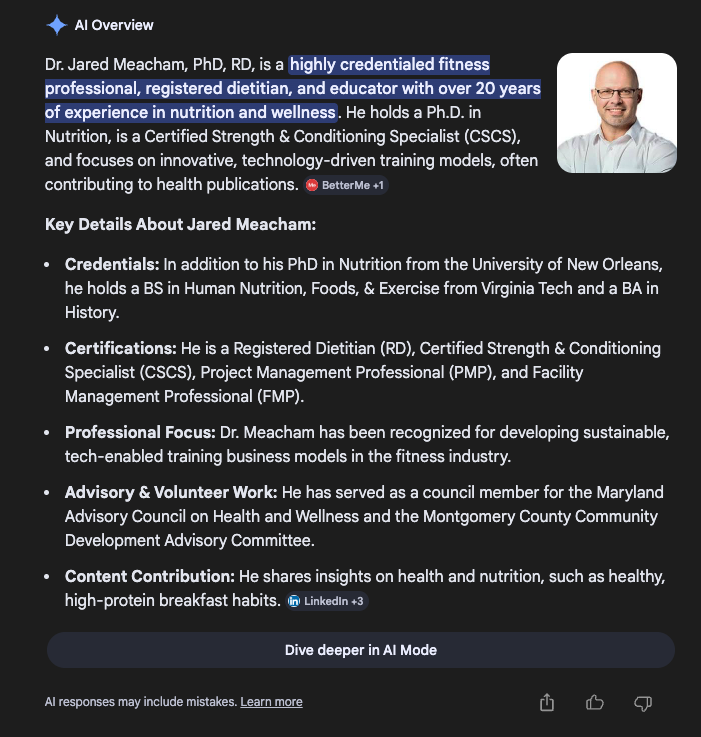
As well as this, Healthline tells Google that Dr Jared Meacham “medically reviews” articles including the one we’re looking at.
A quick Google search of his name tells you everything you need to know about how Google sees this person: as a trustworthy, qualified expert within his field, giving Google another reason to keep rewarding Healthline now and in future.
Other types of schema including FAQ also helps to feed Google answers that it can use in AI Overviews
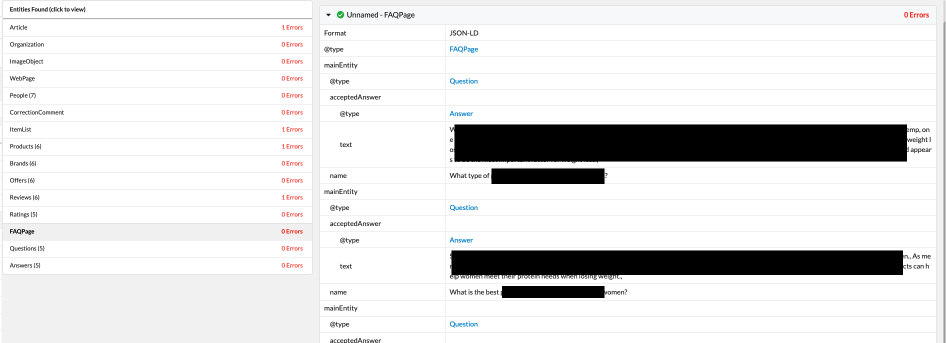
As well as telling Google that their page is written by (real) humans with credentials and edited by Doctors, Healthline have also made sure to include their FAQs within correctly implemented FAQ schema too; this can help Google “pick up” quick answers to include within search results features including AI Overviews, “People Also Ask”, and Featured Snippets, to help give you more chance of getting the valuable clicks through to your site.
The same can also be achieved by adding “Question” and “Answer” schema, which Healthline have also implemented on the same page.
…Of course, riding off the back of the extremely established website that’s been around for a long time with a crazy powerful backlink profile that is Healthline within the health niche massively helps.
However, even sites with lower “DR” are ranking and benefitting from spoon feeding Google the right entity schema too.
FitandWell as a “lower DR” site ranking among the likes of the “giants” in the UK
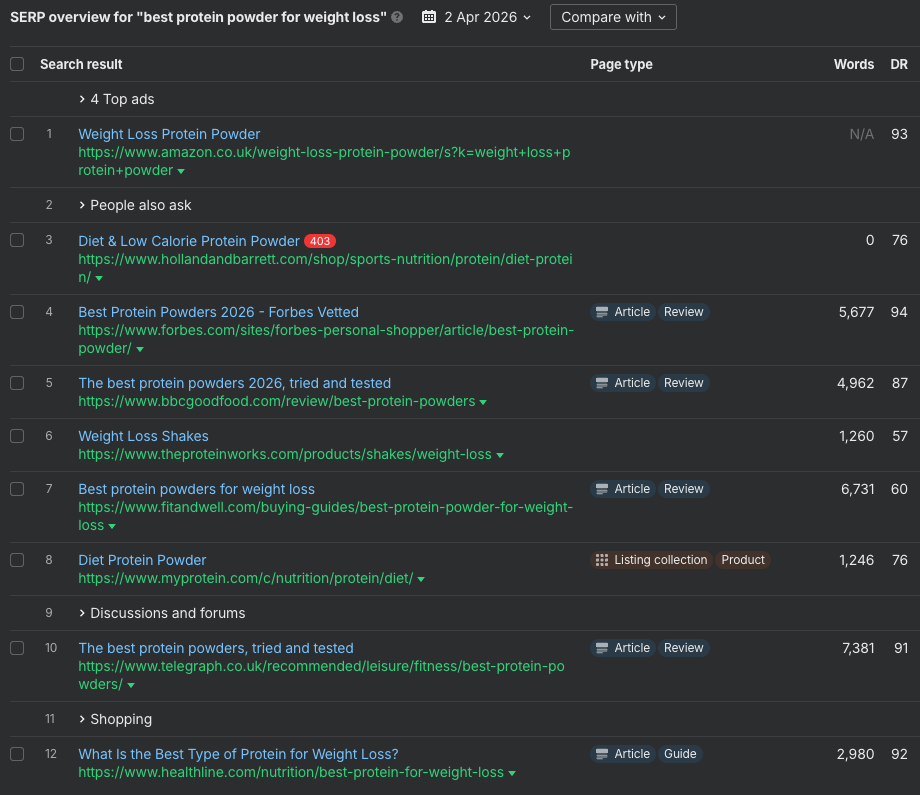
*The SERPS for “best protein powder for weight loss” in UK
With a DR of 60, FitandWell is no newcomer or fresh site but you might argue that it’s still “punching above its weight” in the highly volatile and difficult niche that is Health and ranking alongside the likes of Healthline, Forbes Health, Men’s Health and more.
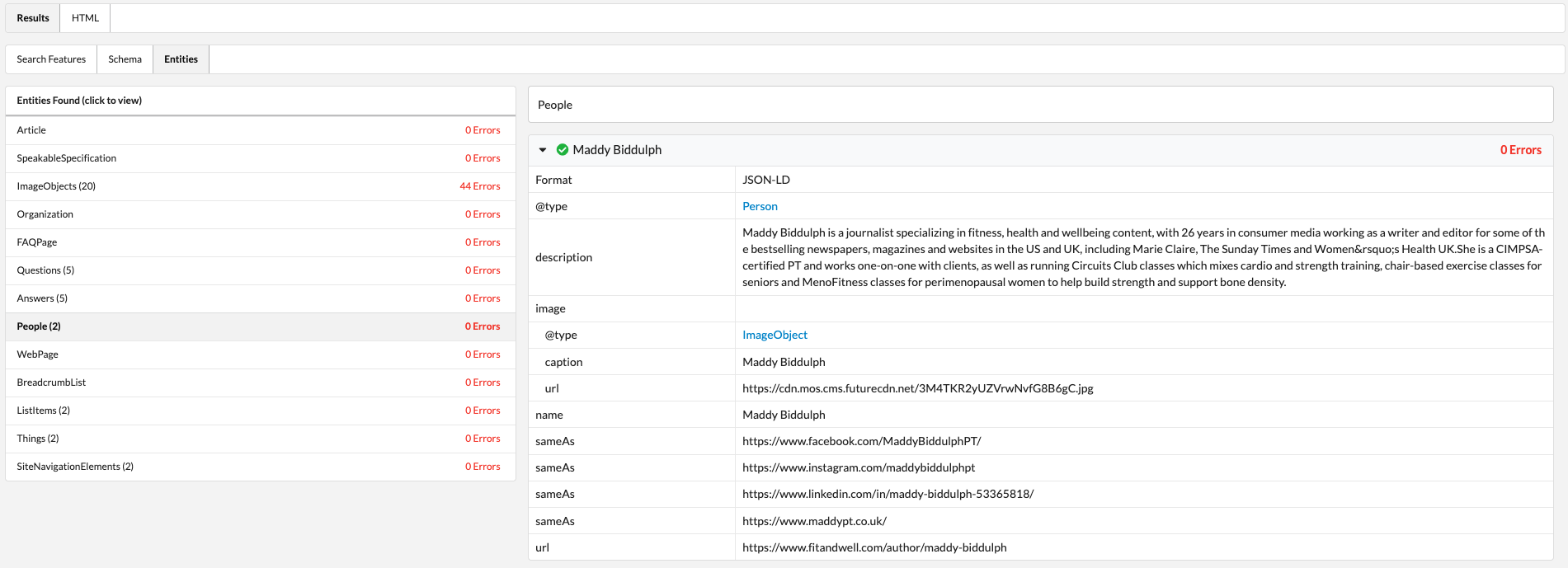
Being the technical SEO nerd that I am, after digging into their structured data via Sitebulb’s Structured Data Testing Tool, I have to applaud FitandWell’s implementation of “person” schema.
More specifically, they are not just including a basic name and job title. Their Person schema is properly fleshed out with fields such as; name, description, image, url, and sameAs. This all works together to build a strong entity.
Expanding on the above, the description field is doing a lot of heavy lifting in the structured data. It clearly outlines Maddy Biddulph’s 26 years of experience in consumer media - specifically mentioning well known publications like Marie Claire, The Sunday Times and Women’s Health UK. It also includes her professional credentials as a CIMPSA-certified PT and details the type of work she does with clients. This feeds Google clear information about Maddy’s expertise as a writer in the Health niche in exactly the format it looks to digest: structured data.
FitandWell have also implemented an ImageObject within the schema, tying a named, crawlable image directly to the entity. That might seem minor, but it reinforces that this is a real, identifiable person rather than just a name on a page (and potentially fake person).
The “sameAs” schema is where they continue to really spoon feed Google. They are linking out to multiple verified profiles including Facebook, Instagram, LinkedIn, and her own PT website; this allows Google to reconcile all of these profiles across all online platforms into a single entity, importantly confirming that Maddy is “a real, credible human”.
All the above is exactly what I recommend every site in the Health niche to be implementing. It goes beyond simply mentioning that a writer is credible with normal html
To confirm, FAQ and Question/Answer schema are all incorporated on FitandWell’s page too.
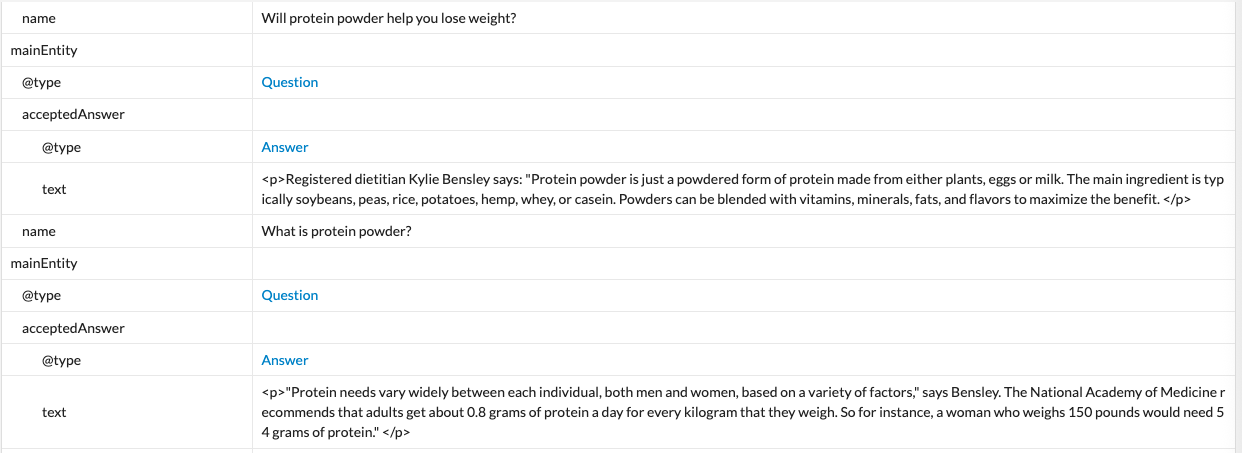
*Screenshot of Sitebulb’s Structured Data Testing Tool showing the FAQ schema on FitandWell’s article.
Conclusion: It’s more important than ever to feed Google information it can actively use in AI Overviews and help it decide whether you’re worth trusting → Structured Data
Apart from my rant about early Google EAT misconceptions, it’s clear that this blog has been heavily focused on technical SEO/structured data.
I’m not saying technical SEO is the be all and end all, as we all know how important backlinks and on-page SEO are within any successful SEO strategy to help give the best chance of ranking as highly as possible for high intent KWs, and increasing revenue via organic traffic as a result.
However, the point stands that simply pressing “publish” with content containing an author box, and hoping that Google’s AI is now intelligent enough to put all the pieces of information on your page together to form the big picture, isn’t always enough.
Especially in the age of AI SEO we’re now in, structured data should no longer be treated as the “cherry on top” to tick on-page SEO boxes of best practices; many SEOs have figured out that schema is now key in feeding Google information that’s used for AI Overviews.
Key takeaway on the importance of structured data and what SEOs should be implementing
In terms of what you should actually be doing to ensure optimal implementation of structured data, there’s a clear order to follow (of course, after the obvious technical SEO basics of making sure your site is crawlable and indexable).
All SEOs should be defining their site/business as a real entity. That means implementing “Organisation” schema and making sure your business details are consistent across your site and external platforms, such as social media profiles. This is your baseline trust signal.
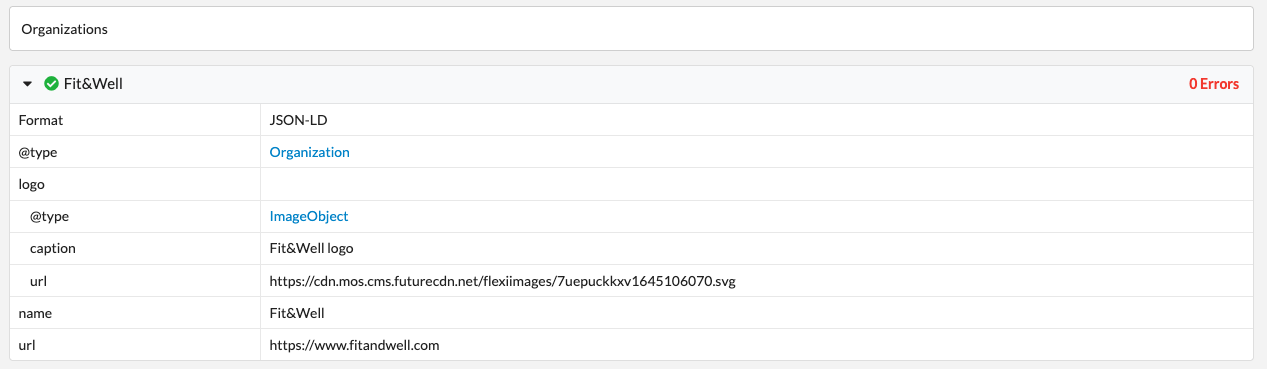
After that, focus heavily on your writers - this is where most sites in the health space are still under-optimised. Every article should be tied to a properly implemented “person” entity schema, not just be a name on the page.
As I’ve shown with the FitandWell example, which I’ll share a screenshot of again, this includes relevant credentials/experience, a detailed description, and links to real external profiles that confirm who they say they are:
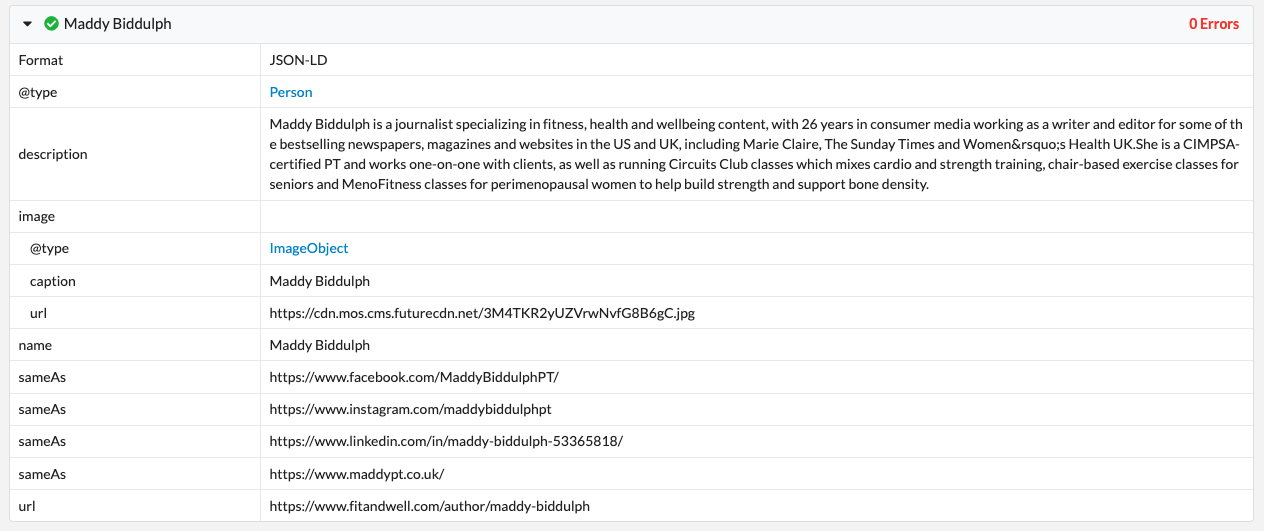
Once that’s in place, it’s important to connect everything together; your structured data should clearly tell Google who wrote it and why those people are qualified/worth trusting. To achieve this, use “sameAs” schema to include URLs to their social media profiles, external author page, then include relevant URLs for further information about the writer as shown in the above screenshot.
Ultimately, this ensures that you’re building a clear chain of trust that Google can follow.
From there, you can implement additional schema like FAQ and question and answer if relevant, often tied to FAQ sections via headings on-page. This is what can further help feed Google the exact answers it can pull into AI Overviews, Featured Snippets, “People Also Ask” and more.

*Screenshot of the front-end next to the schema being tied to the headings of the FAQ section on the same FitandWell article.
In conclusion, the “giants” of niches in highly regulated and competitive niches, such as Medical/Health/Supplements, are implementing structured data to succeed in AI search. It’s now even more important for those with lower “site strength” to do the same to keep up.
If you’re looking to fully optimise for the AI future that we’re now in, using tools such as Sitebulb’s Structured Data Testing Tool is no longer a choice that can be ignored - it’s imperative in your SEO strategy.

Sei Kato is a Full-Stack SEO and affiliate marketing expert with a decade of experience driving organic growth for startups and some of the biggest brands in the toughest niches online, specialising in technical, on-page, and off-page SEO. He has a proven track record of scaling websites from low-budget beginnings to multi-million-pound revenues and is currently a Market Growth SEO Specialist at ICS-digital.

Related Articles
 Enterprise SEO Audit: From Crawl to Prioritised Action Plan


 Which Rendering Approach is Best for SEO on E-commerce Sites?

 The M&A Migration Framework: Merging Websites Without Killing Business Value

 Sitebulb Desktop
Find, fix and communicate technical issues with easy visuals, in-depth insights, & prioritized recommendations across 300+ SEO issues.
- Ideal for SEO professionals, consultants & marketing agencies.
 Sitebulb Cloud
Get all the capability of Sitebulb Desktop, accessible via your web browser. Crawl at scale without project, crawl credit, or machine limits.
- Perfect for collaboration, remote teams & extreme scale.