

I Asked ChatGPT for the UK's SEO, Content and AI People. It Listed Me First.
 Shweta Gupta
Published July 6, 2026
This week, Shweta Gupta walks us through an interesting LLM visibility case study…
I typed a prompt into ChatGPT asking for a list of 50 people in the UK working at the intersection of SEO, content, and AI, maybe early in their careers. It came back with a table. I was number one on it.
Now, before you close the tab thinking this is a humble-brag dressed up as a case study, let me be honest about what that result is and what it isn't. Being first in a list a model generates is not the same as ranking number one on Google. There's no SERP, no clean ordering by authority, and if you run the same prompt three times you might get three slightly different lists. I know that. You know that.
But here's the part that made me sit up. The model had no memory of me. None. I'll explain why that matters in a second, but the short version is this: ChatGPT didn't surface me because it knew me personally. It surfaced me because the open web had taught it who I am, accurately, from a standing start, in about six months. It even described my niche correctly, down to my focus on GEO and AI-assisted workflows, and it pulled my own site as one of the sources.
That wasn't luck. I built it. Slowly, deliberately, and with a lot of failing in between. This article is the honest version of how.
Contents:
- Why I tested on the one AI tool I never use
- What I was testing, and what I wasn't
- Reverse-engineering where the models actually learn
- Step one: I fixed the boring technical stuff first
- Step two: I wrote content that sounded like me, structured for machines
- Step three: I showed up where the models were already looking
- The three audiences you're really writing for
- What didn't work, and what six months actually felt like
- So is SEO dead? No. It's the foundation GEO is built on.
- If you want to try this yourself
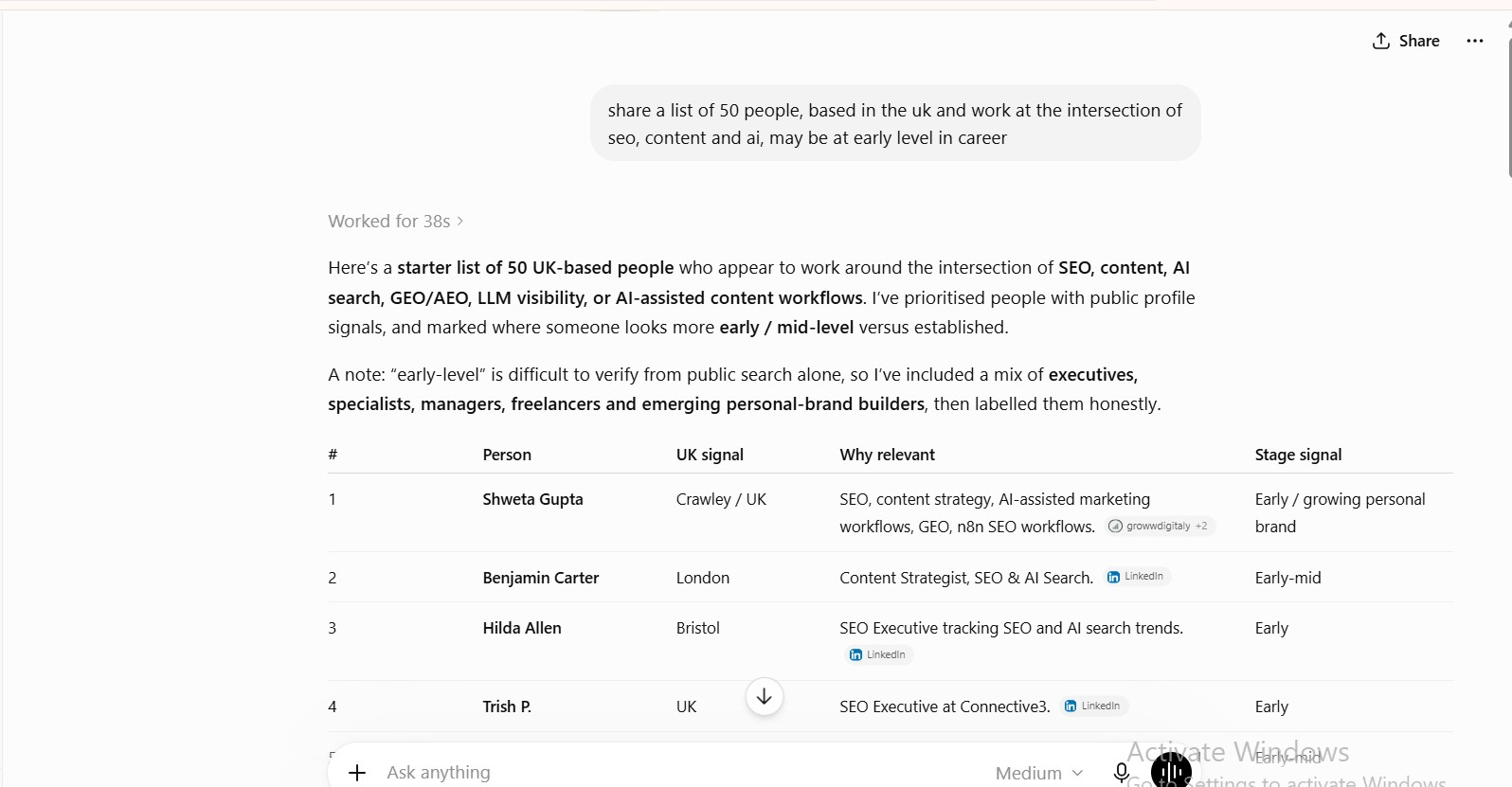
The result that kicked this off: I asked ChatGPT for 50 UK people working across SEO, content and AI, and it listed me first, on an account with no memory of me.
Why I tested on the one AI tool I never use
I use Claude for almost everything. It's where my actual work lives. I barely touch ChatGPT day to day, and I deliberately keep my account clean of personalisation.
That was the whole point of the experiment.
If I'd run this test on the tool I use constantly, the result would be biased. The model would have my chat history, my saved memory, my context. Of course it would know who I am. That tells you nothing about your visibility and everything about your own account settings. It's the single biggest flaw in most "I asked ChatGPT about my brand" posts you'll read: they're measuring their own memory, not the open web.
So, I tested on a model that had nothing saved about me. No history. No memory. Nothing personalised. Whatever it knew, it learned from the public web, the same web your clients' customers are being described from right now. That's the clean version of the test, and it's the only version worth running if you actually want to know whether your work is landing.
What I was testing, and what I wasn't
Let me draw the line clearly, because the SEO community (rightly) eats vague claims for breakfast.
I am not claiming I "ranked number one" in any deterministic, repeatable, Google-style sense. AI outputs vary. Lists shuffle.
What I am claiming is narrower and, I think, more interesting: a model with no memory of me, asked an open question about my niche, surfaced me at all, named me first in that instance, and described me accurately using sources that included my own website. From a standing start. That tells me the footprint I built was legible to the machine. And legibility is the whole game now.
If you want to hold me to one honest sentence, it's this: I made myself easy for an LLM to find, understand, and summarise, and I can show you exactly what I did.
Reverse-engineering where the models actually learn
Before I changed anything, I tried to understand the plumbing.
Large language models don't "know" you the way a friend does. When they answer a live question, most of them use some form of retrieval-augmented generation (RAG), which is a fancy way of saying the system pulls relevant text from sources it can reach, then writes an answer around it. Sitebulb's own guide to SEO for LLMs breaks this down well if you want the deeper version.
The practical takeaway for me was simple: if I wanted to show up in the answer, I had to exist, clearly, in the sources the model retrieves from.
One idea from Erin Simmons’ talk has really stayed with me: trust is the future of search, and community building is how we build it.
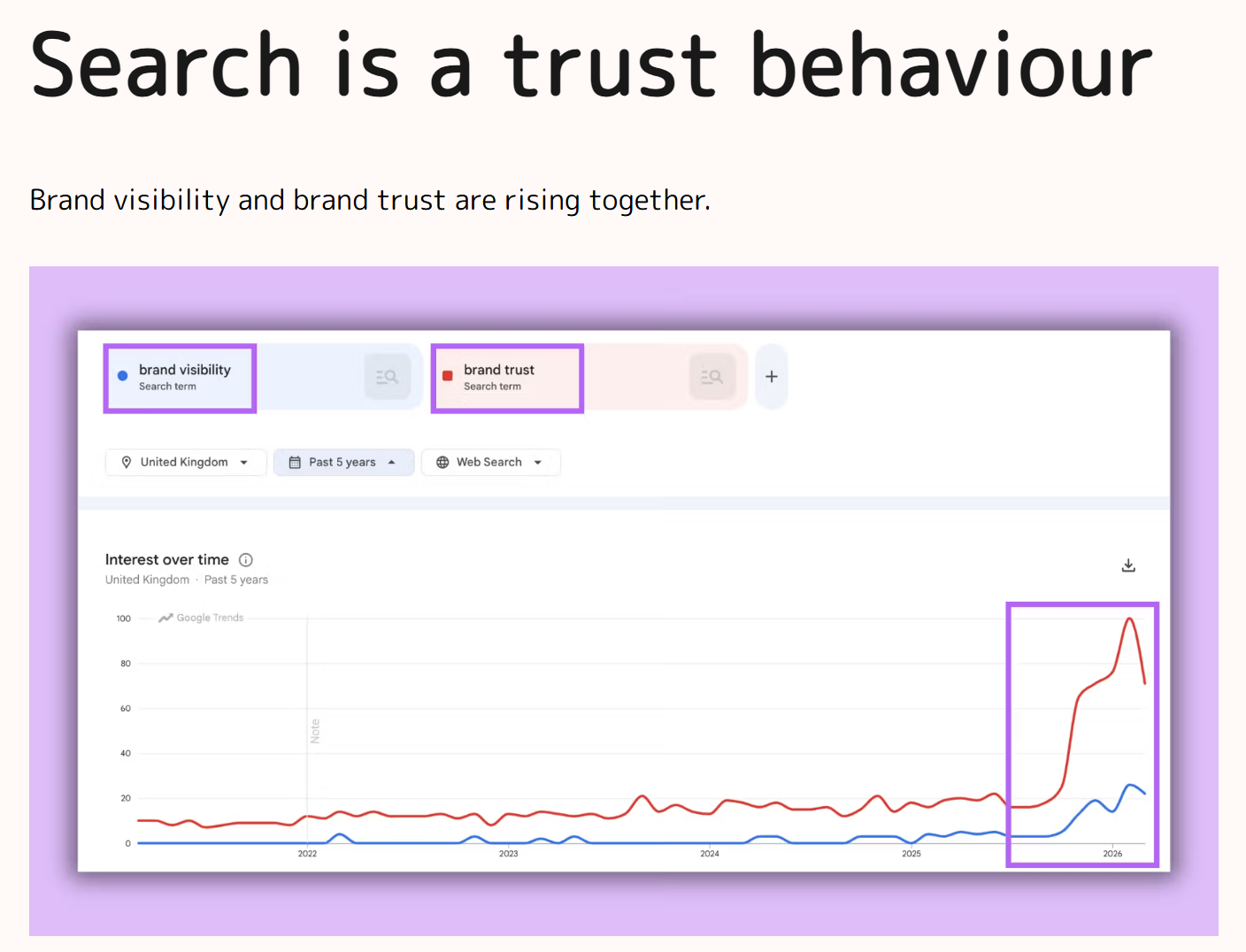
So, which sources actually create that trust?
I went looking for data instead of guessing. SEMrush’s analysis of the most-cited domains in AI answers shows the same handful of platforms surfacing again and again: Reddit, Wikipedia, LinkedIn, and a long tail of everything else.
Community and user-generated platforms punch massively above their weight because models seem to treat real people answering real questions as trustworthy, experience-based signals.
There's also a consensus effect worth understanding. Research into AI citation patterns suggests these systems look for agreement across multiple independent sources before they'll confidently describe or recommend something. If you only exist on your own website, you're a single unverified claim. If the same positioning shows up about you across several places the model trusts, you become something it can repeat with confidence.
That reframed the entire job for me. I wasn't optimising a page. I was building a consistent, findable footprint across the exact places the models go looking.
Step one: I fixed the boring technical stuff first
You cannot be retrieved if you can't be reached. So, before I wrote a single new piece of content, I treated my own site the way I'd treat a client's. I went through the unglamorous technical checklist: page speed, indexing, canonicals, sorting out messy redirects, and a clean robots.txt that actually let the right crawlers in. (If your robots.txt is blocking AI crawlers, none of the rest of this matters. Check it first.)
Here's a thing I nearly missed. Most AI crawlers do not render JavaScript. Google does, after more than a decade of building the infrastructure for it, but the others mostly don't.
A joint Vercel and MERJ analysis of over 500 million GPTBot fetches found zero evidence of JavaScript execution. The bots fetch your raw HTML and stop there. Shannon Vize wrote a clear explainer on AI crawlability for the Women in Tech SEO community that spells out the consequences.
So, a page can rank beautifully on Google and be a near-empty shell to ChatGPT and Claude, because the content you can see only exists after JavaScript runs. Sitebulb wrote about this exact trap in The Invisible Web: the bots mostly read response HTML, not rendered HTML.
The cheapest test is the oldest one: open your page, View Source, and check whether your actual words are in there. If they're not, the models can't see them either.
But View Source only tells you so much. It won't easily show you which tags JavaScript is adding or moving behind the scenes. So, I ran my whole site through Sitebulb's Response vs Render report, which renders each page and compares it against the raw response the server sends. And I'll be honest, it humbled me in a useful way.
The headline number looked great. A Response vs Render score of 95, with my titles, meta descriptions, canonicals, and robots directives all showing "No Change," all present and correct in the response HTML.
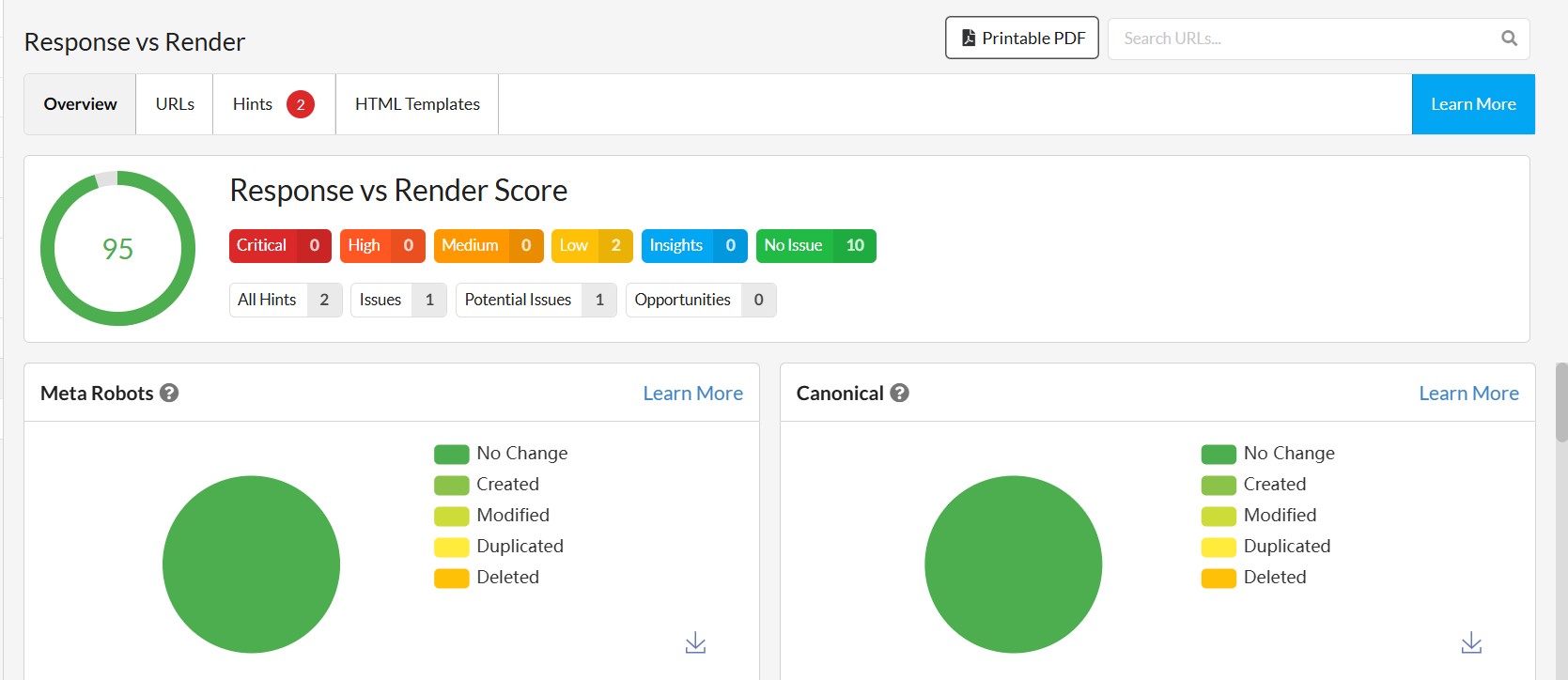
The headline result: a Response vs Render score of 95, with my titles, canonicals, meta and robots all showing "No Change", meaning they're identical in the response and rendered HTML.
Then I opened the Hints tab, and there was the catch. Every one of my pages had some body text that only appeared after JavaScript ran. And on 80.56% of my pages, my <h1>, the main heading, was being injected by JavaScript and wasn't in the raw response at all.
The honest catch, under the Hints tab: 100% of my pages carry some JavaScript-only body text, and on 80.56% of them my <h1> appears only after JavaScript runs, so a non-rendering bot wouldn't see it.
On most of my site, the crawlers I'd optimised for were missing my main heading and some body copy. The cause turned out to be my theme: I'm on Divi, and its builder often outputs headings inside modules that get assembled with JavaScript, so the H1 lands in the rendered DOM but not the raw response.
It didn't stop me from ranking, though, and that's the useful part. My core positioning, the bio that states plainly what I do, was in the response HTML, so the bots could still read it. An H1 is only one signal, and LLMs weigh plenty of others: your body copy, whether other sites cite you, your footprint elsewhere. The missing H1 was a gap, not a dealbreaker, and it's on my fix list.
One more thing, an honest take on llms.txt. I added one, because I'm a tester and it took ten minutes. But I won't pretend it did anything. Since I ran this experiment,Google has stated plainly that it doesn't use llms.txt for Search or its AI features, and Google's John Mueller has compared it to the old meta keywords tag, a self-declared signal nobody checks. There's no confirmed evidence the LLMs lean on it either. I'm including it for transparency, not as a tactic. If you're prioritising your time, put it near the bottom of the list.
Step two: I wrote content that sounded like me, structured for machines
Once the site could be reached, I gave it something worth retrieving.
I wrote content that defined my speciality, but I refused to strip the personality out of it. This is the bit I feel strongly about. There's a temptation right now to write flat, machine-pleasing mush, and I think that's a mistake. The models are increasingly good at picking up on real experience, specific opinions, and a point of view. So, I wrote like a practitioner who has actually done the work, with my own examples and my own takes, and then I made sure the structure was clean enough for a machine to parse.
What "clean enough" meant in practice:
Clear headings that genuinely describe what each section answers, so a passage can be lifted out and still make sense.
The answer near the top of the section, not buried three paragraphs down after a story about my dog. (His name is Cooper. He does not help with SEO.)
Plain, direct sentences. One idea at a time.
Consistent language about who I am and what I do, everywhere, so there was no confusion for a system trying to summarise me.
None of this is new. This is on-page SEO and good content design wearing a slightly different hat. Which, honestly, is the recurring theme of this whole experiment.
Step three: I showed up where the models were already looking
This was the off-page half, and it's where the "content search and extraction" thinking came in.
I didn't spray content everywhere. I went to the specific platforms the data told me the models trust, and I left a genuine impression of my expertise on each one: LinkedIn, Reddit, Quora, Medium, and the niche sites that matter in my corner of the industry. It's the same approach I'd used earlier for a healthcare client: reading forums to understand how real people described their problems, then contributing useful answers, which eventually helped that brand start appearing in AI answers.
The platform choice wasn't random. For professional and B2B-flavoured queries, LinkedIn is consistently one of the most-cited domains in AI answers. Community platforms like Reddit and Quora carry weight far beyond their link profile because they read as real people sharing real experience.
The point was consensus: the same expertise, consistently expressed, across several places a model retrieves from, so that when it builds a picture of "people in this niche," I'm part of the evidence rather than a single unverifiable claim on my own website.
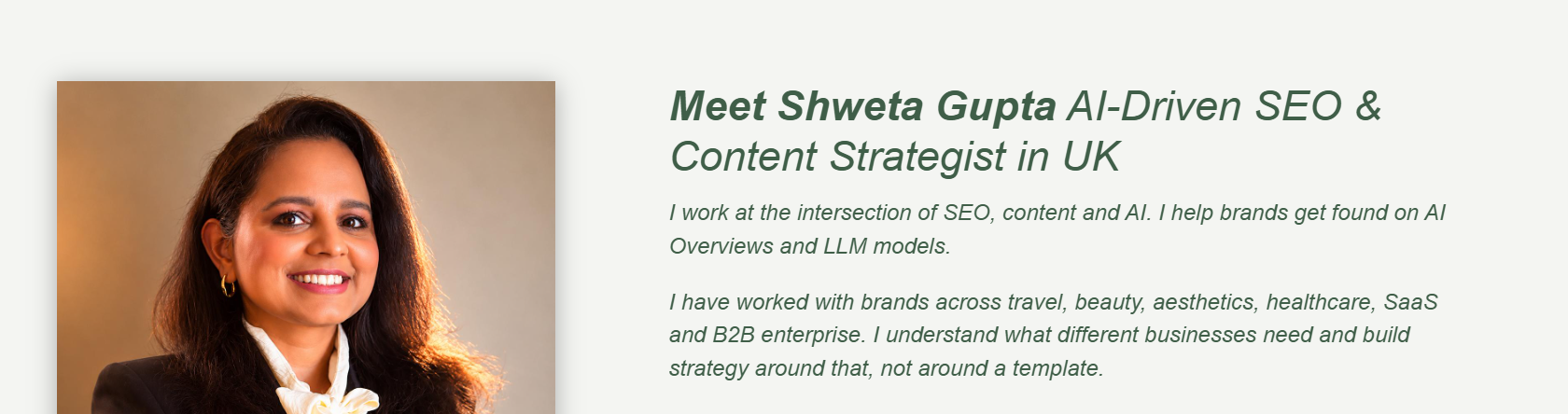
My site's intro section. The bio spells out plainly what I do, "I work at the intersection of SEO, content and AI", the kind of clear, consistent positioning that gives a model something solid to summarise.
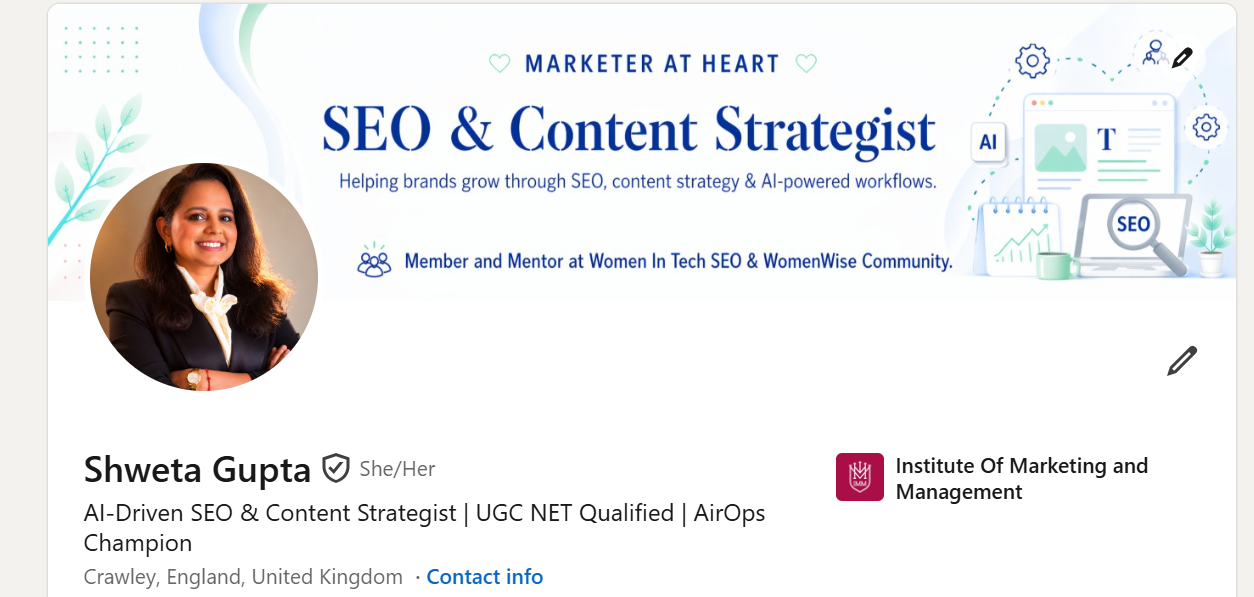
LinkedIn was central to the footprint, it's one of the most-cited domains in AI answers for professional queries. The same one-line positioning I use everywhere: SEO, content strategy, and AI-powered workflows.
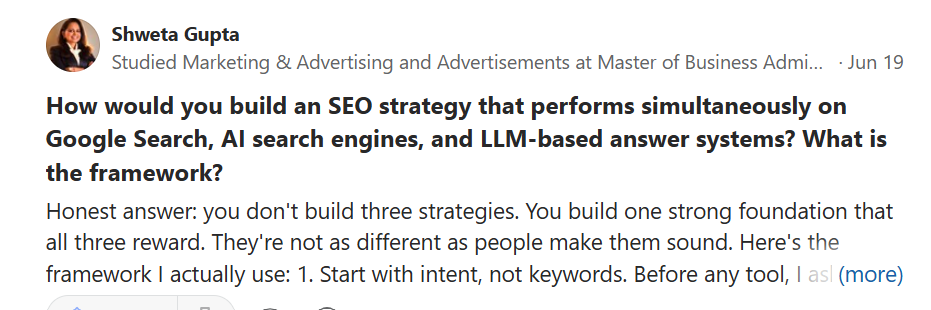
Doing the work on the platforms the models read: answering a real question about SEO across Google, AI search and LLMs, in my own words. This is what "showing up where the models look" actually looks like day to day.
The three audiences you're really writing for
If I had to compress everything I learned into one shift in thinking, it's this. You're no longer writing for one audience. You're writing for three at once, and they overlap far more than the GEO hype wants you to believe:
Your people. The actual humans who need to trust you and, eventually, hire you or buy from you. If the content doesn't land with them, nothing else matters.
Google. Still the biggest channel, still running on crawlability, clarity, structure, and authority.
The models. ChatGPT, Claude, Perplexity, and the rest, retrieving and summarising you for people who may never click through to your site at all.
Here's what surprised me: optimising well for one mostly served the other two. The places they pull apart are narrow (rendering is the big one, where Google sees your JavaScript and the LLMs don't). Most of the time, doing the fundamentals properly fed all three.
What didn't work, and what six months actually felt like
I don't want to hand you a clean success story, because it wasn't one.
It took six months. Not six weeks. There were long stretches where nothing moved, where I'd check and find the open web had learned nothing new about me, and that little imposter-syndrome voice (which, if I'm honest, I've never fully silenced) started asking what I thought I was doing.
The vanity metrics were humbling. My Reddit profile sat at two followers for the first four months. Two. I kept showing up anyway, because I was fairly sure the follower count wasn't the thing that mattered, the contributions were, and where they'd surface wasn't on my profile. But it's a strange kind of faith to keep posting into what feels like an empty room.
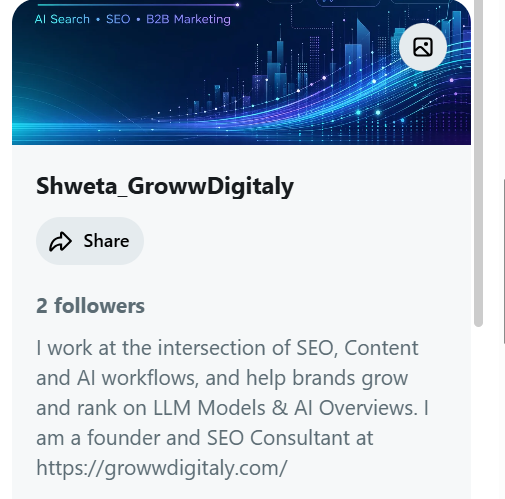
Four months in, still two followers. The surface-level numbers stayed flat for a long time, the visibility that actually mattered wasn't showing up here.
Some content I was proud of went nowhere. Some platforms I assumed would matter didn't seem to. The results came from consistency and a fair amount of patience, not from one clever trick. If you need a dopamine hit from fast numbers, this approach will test you.
So is SEO dead? No. It's the foundation GEO is built on.
I'll say this with my full chest. SEO is not dead. The web has to know you before the models can.
Every single thing that worked in this experiment was, underneath the AI framing, just good SEO done deliberately. Reachable site. Clean technical foundation. Clear, useful, well-structured content with a real point of view. A consistent presence across trusted places. That's not a new discipline. That's the discipline, pointed at a new kind of reader.
And this isn't only my opinion. Google's own guidance is that optimising for its generative AI features is still, fundamentally, SEO, built on the same foundations of useful content, crawlable pages, and clear structure, not on AI-specific hacks. The tactics that get you into AI answers are mostly the tactics that were already getting you found.
GEO, AEO, whatever we end up calling it, is a new lens on a familiar craft. It rewards the people who never stopped doing the fundamentals well.
If you want to try this yourself
You don't need a budget. I didn't use one. You need time, consistency, and a willingness to test and fail. If you want a starting order of operations:
Run the clean test. Use an AI tool you don't use personally, with no saved memory, and ask an open question about your niche. See if you exist, and how you're described.
Make yourself reachable. Fix the technical basics, check your robots.txt, and View Source to confirm your real content is in the raw HTML, not hidden behind JavaScript.
Write something worth retrieving. Clear structure, answers near the top, and your actual expertise and personality left in.
Build consensus. Show up consistently, with the same positioning, across the specific platforms the models trust in your field.
Wait longer than you'd like. Then check again.
I'm still figuring plenty of this out. Anyone who tells you they've got AI search fully solved is selling something. But this experiment taught me that the boring fundamentals I fell in love with still work, even on the newest, shiniest readers on the web. Which, honestly, is the most reassuring thing I've learned all year.

Sitebulb is a proud partner of Women in Tech SEO! This author is part of the WTS community. Discover all our Women in Tech SEO articles.

Shweta Gupta is a UK-based SEO consultant and the Founder of GrowwDigitaly, specialising in SEO, content strategy, and AI-assisted marketing workflows. Alongside client work, she builds AI-powered tools and workflows that automate repetitive, time-consuming tasks. She has experience across SEO, paid media, content optimisation, and website management, spanning the healthcare, travel, beauty, SaaS, and B2B industries.

Related Articles
 The M&A Migration Framework: Merging Websites Without Killing Business Value

 How to Audit the Entity Signals That Shape Brand Understanding in AI Search

 Ranking #1 Isn't Enough Anymore: What Pixel Visibility Reveals About the 2026 SERP

 Sitebulb Desktop
Find, fix and communicate technical issues with easy visuals, in-depth insights, & prioritized recommendations across 300+ SEO issues.
- Ideal for SEO professionals, consultants & marketing agencies.
 Sitebulb Cloud
Get all the capability of Sitebulb Desktop, accessible via your web browser. Crawl at scale without project, crawl credit, or machine limits.
- Perfect for collaboration, remote teams & extreme scale.